The Road Ahead: EV Charging Infrastructure in India
As India accelerates its transition to electric mobility, the development of a robust EV charging infrastructure has emerged as a key priority. With rising fuel costs, government incentives, and a strong push for sustainability, electric vehicles are becoming an increasingly attractive option — but for widespread adoption, reliable and accessible charging stations are essential.
India's EV ecosystem is evolving rapidly, with both public and private stakeholders investing in charging networks. The government's Faster Adoption and Manufacturing of Electric Vehicles (FAME) initiatives, state policies, and the push for battery swapping are driving change. Yet challenges remain — charging station density, grid reliability, and standardization of connectors all need attention.
This issue explores the current landscape of EV charging in India, innovations in charging technology, and what it means for industries reliant on electrical insulation and high-performance elastomers — including how specialized silicone compounds contribute to safer, more efficient EV infrastructure.
Basics of EV Charging Infrastructure
EV charging infrastructure is the backbone of electric mobility. Unlike conventional refuelling for internal-combustion vehicles, EV charging requires different charger types, power levels, and grid integration strategies. At its core are three primary charging levels:
| Charging level | Supply | Power | Best suited for |
|---|---|---|---|
| Level 1 — Slow charging | 230 V AC household outlet | 2–5 kW | Overnight home charging |
| Level 2 — Fast AC charging | Typically 415 V AC in India | 7–22 kW | Public & residential stations; full charge in a few hours |
| Level 3 — DC fast charging | High-voltage DC, bypassing the onboard charger | 50–350 kW | Rapid charging — up to 80% in under an hour |
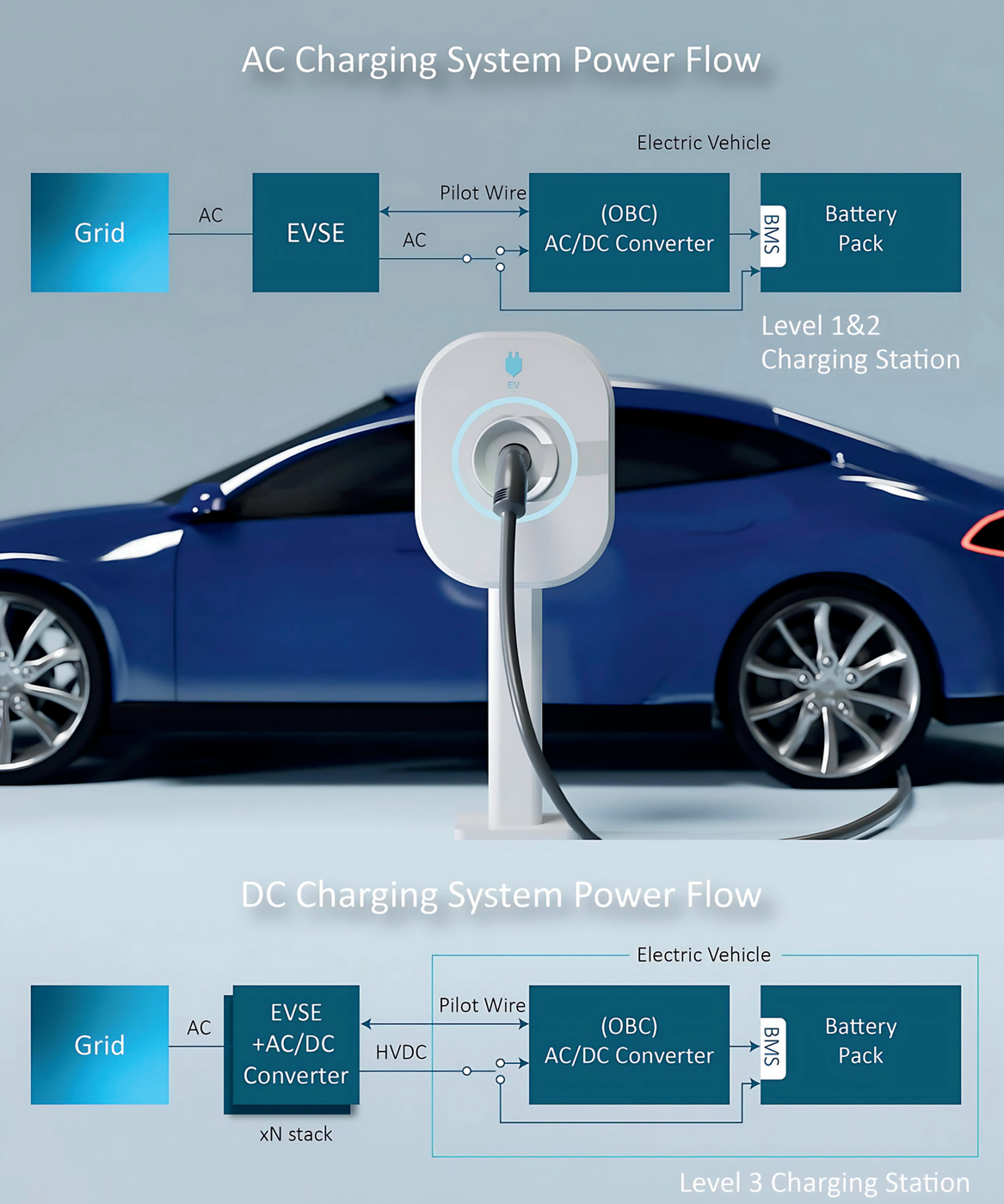
The ecosystem is supported by various connectors and standards. India primarily follows the Combined Charging System (CCS) and CHAdeMO standards for fast charging, while Bharat AC-001 and DC-001 are specific to India's domestic framework. The government is also promoting a battery swapping policy for certain vehicle categories.
A well-designed network considers not just charger availability but grid capacity, power distribution, and smart charging. Advanced stations increasingly integrate renewable energy sources, smart grids, and IoT-enabled management systems to optimize energy usage and reduce grid stress.
India's Progress in the Global EV Charging Market
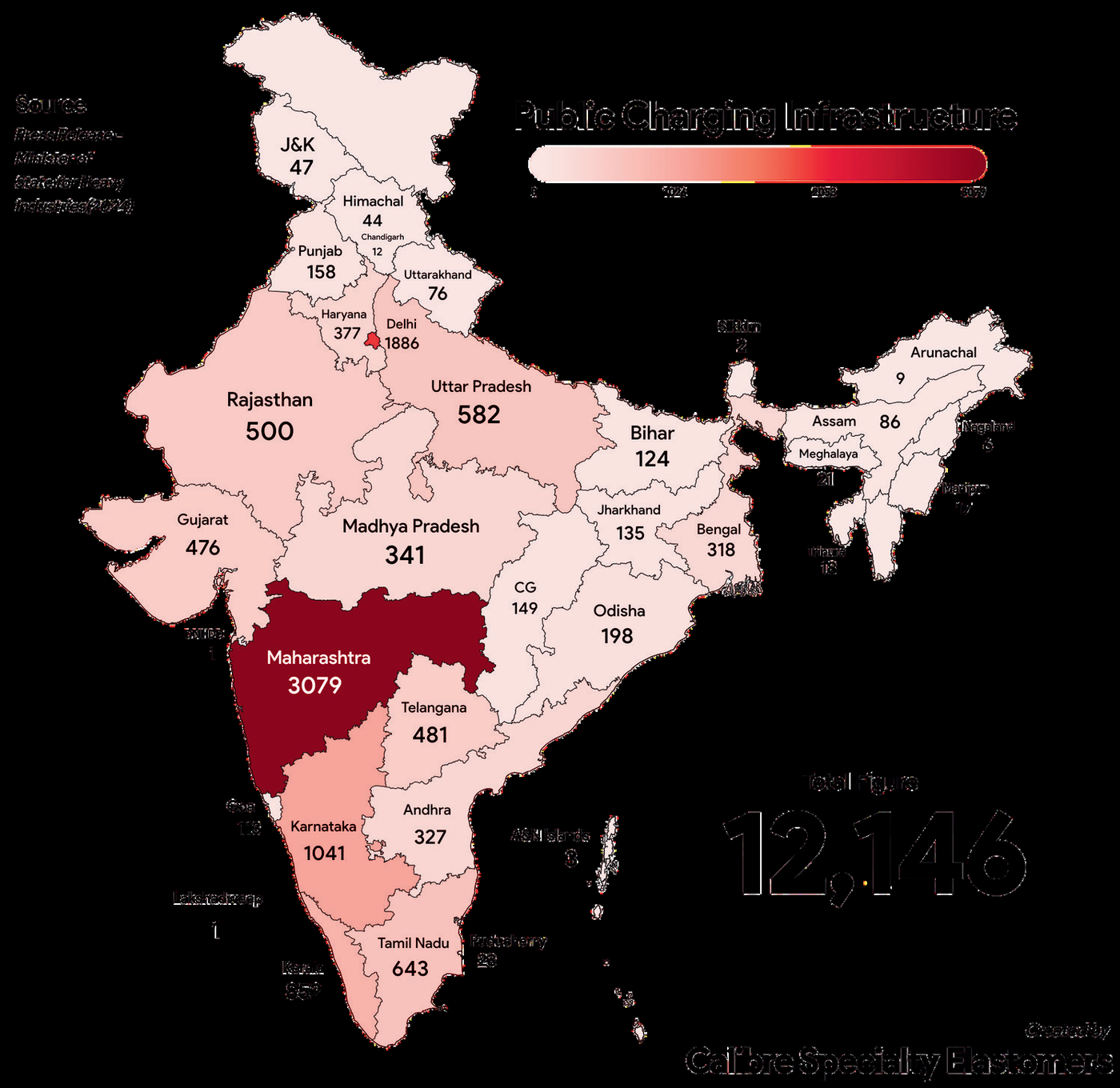
According to The Indian EV Charging Station Market Report 2023-2028 (Research and Markets, December 2023), India had 9,113 operational charging stations by the end of FY 2023, projected to rise to over 68,956 stations by 2028.
To meet the target of EVs comprising 30% of new private vehicle registrations by 2030 — approximately 80 million EVs — estimates suggest 3.9 million public and semi-public charging stations will be needed to maintain an optimal ratio of one station per 20 vehicles. The National Highways Authority of India plans charging stations along national highways every 40–60 km.
Key Challenges on the Road to a Fully Charged Future
The Road Ahead
India's EV charging ecosystem is evolving rapidly with government policies, private investment, and renewable energy integration. Addressing these bottlenecks through policy support, grid modernization, and public-private collaboration will be crucial to a seamless, reliable charging network.
A strong foundation today will pave the way for a future where electric mobility is not just an alternative — but the mainstream choice.