Why Grid Scale Storage Matters
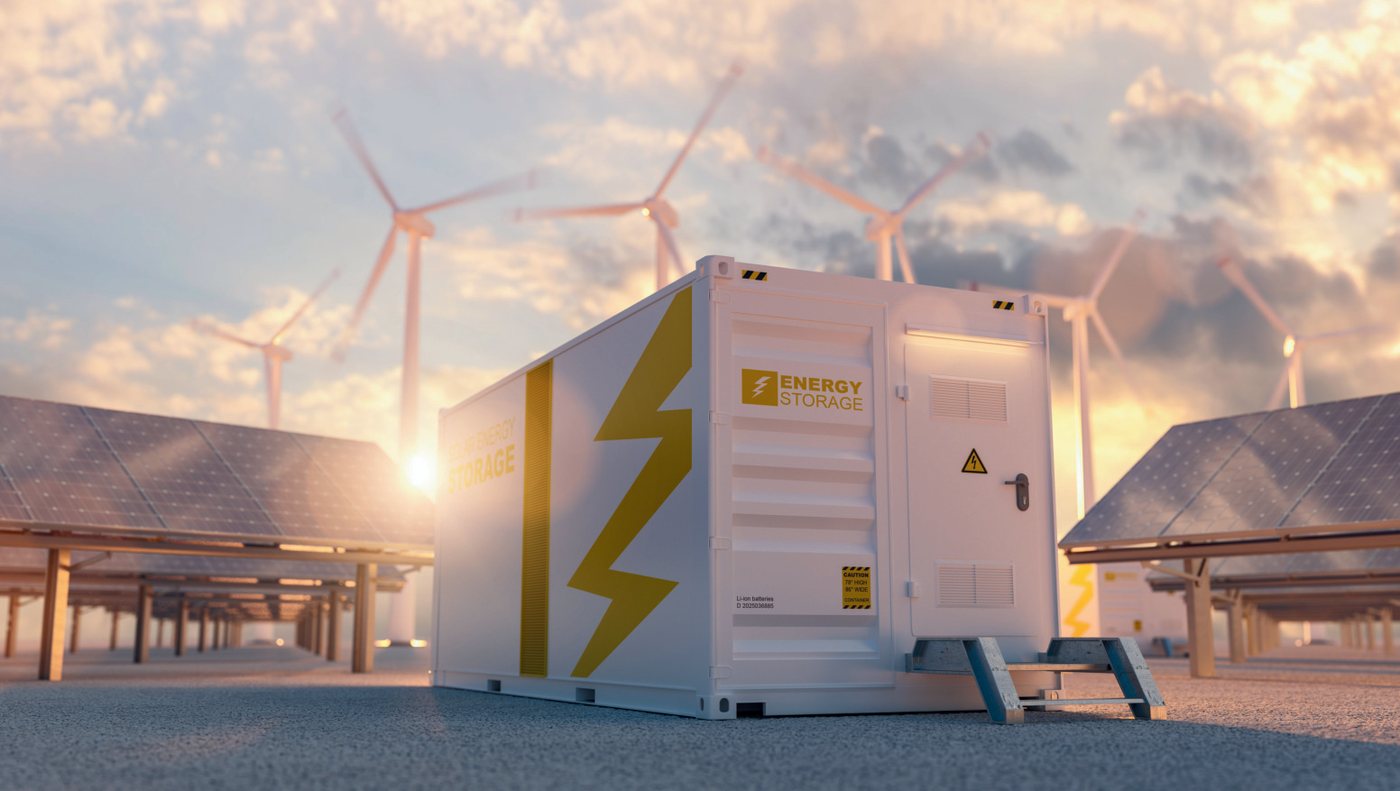
Energy storage plays a pivotal role in maintaining grid flexibility, balancing the fluctuations between surplus and deficit power generation. By 2030, India is projected to install approximately 34 gigawatts (GW) or 136 gigawatt-hours (GWh) of battery energy storage systems (BESS), according to the Central Electricity Authority (CEA).
However, the path forward is not without its challenges. Researchers working on battery energy storage technologies face significant hurdles, particularly in sourcing raw materials. Many of these materials, especially rare earth minerals, are scarce within India.
In response, the Indian government has introduced Viability Gap Funding aimed at supporting the development of 4,000 megawatt-hours (MWh) of battery storage systems. Announced in the 2023 budget, the allocation of ₹3,760 crore is intended to accelerate the integration of renewable energy into the national grid.
One approach to incorporating battery storage into the grid is the Behind the Meter BESS — primarily used to provide backup power during outages or to store excess energy from rooftop solar photovoltaic (PV) installations, serving both residential and commercial users.
India's energy future looks ambitious. The International Energy Agency's India Energy Outlook 2021 estimates that by 2040, the country could install 140 to 200 GW of battery energy storage capacity — potentially the largest such capacity globally.
Trends Supporting the Momentum
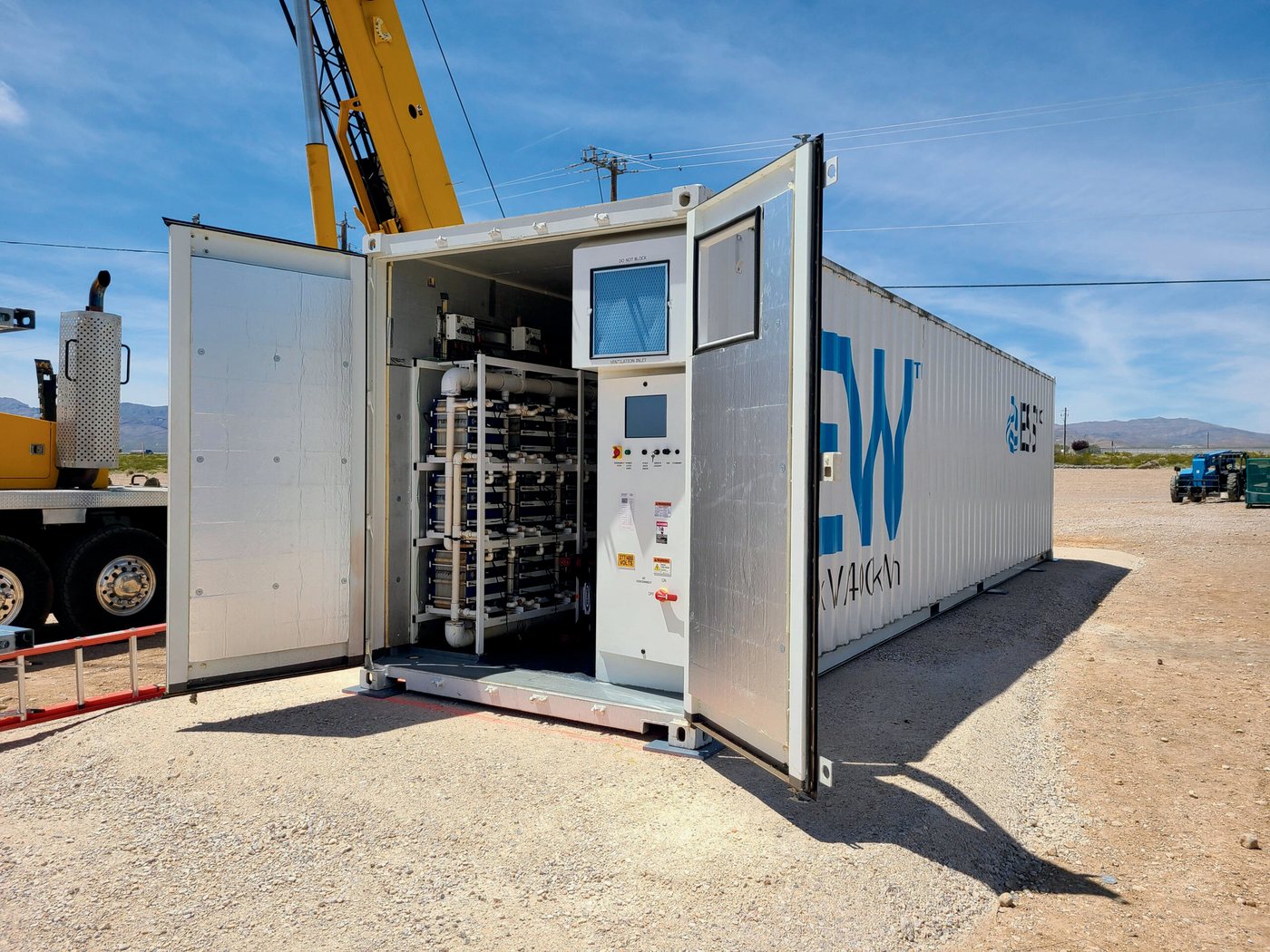
Several ongoing trends are set to bolster this momentum: the rapid deployment of renewable energy, a shift toward decentralized power systems, the growth of hybrid energy solutions, and the rising demand for grid stability, energy access, and energy security. In the coming years, as investment rises, focus will expand beyond lithium to include emerging technologies such as redox flow batteries, supercapacitors, and hydrogen energy storage systems.
India's solar capacity is growing at a tremendous rate, contributing to 77% of total capacity additions in 2022-23. This underscores the critical role solar energy plays in the country's power mix — but with solar power's intermittent nature, balancing resources will become increasingly necessary to maintain grid stability.
According to the CEA's "Optimal Generation Mix 2030" report, India will require 60.63 GW of energy storage capacity by 2030 — 18.9 GW of pumped hydro storage (PHS) and 41.65 GW of BESS, amounting to 336.4 GWh in total. As of March 2023, India's installed PHS capacity stands at 4.7 GW, with an additional 2.7 GW under development; a further 11.4 GW of PHS will be required by 2030.
This significant expansion of BESS post-2030 will be driven by falling capital costs and the continued rise of renewable energy sources — underscoring the importance of preparing India's grid for the seamless integration of a large share of renewables.
Looking Into Non-Lithium Potential Technologies
As power utilities and industrial companies increasingly turn to renewable energy, the demand for grid-scale battery storage is rapidly accelerating. Emerging alternatives to lithium-ion batteries offer potential benefits in environmental sustainability, labour practices, and safety. Moving to non-lithium-based grid storage offers several advantages:
- Resource Availability — Non-lithium technologies, such as sodium-ion or flow batteries, often utilize more abundant and less geographically concentrated materials, reducing supply chain risks.
- Cost-Effectiveness — As non-lithium technologies mature, they can potentially offer lower costs due to cheaper raw materials and simpler manufacturing processes.
- Environmental Impact — Non-lithium batteries typically have a lower environmental footprint, reducing the ecological damage associated with mining lithium and other critical minerals.
- Safety and Stability — Some alternatives, like flow batteries, provide enhanced safety profiles and thermal stability, minimizing risks of fires or explosions.
- Scalability and Longevity — Many non-lithium technologies can be designed for longer cycle life and greater scalability, making them suitable for larger energy storage applications.
- Diverse Applications — Non-lithium systems can be tailored for various use cases, from grid stabilization to renewable energy integration, enhancing overall system flexibility.
Vanadium Redox Flow Batteries (VRFB)
Flow batteries operate using liquid or gaseous electrolytes that pass through cells from storage tanks. According to the International Flow Battery Forum, these batteries are built from low-cost materials like thermoplastics and carbon, many of which can be recycled — and the electrolyte itself can be recovered and reused, leading to a lower cost of ownership.
VRFBs store energy in liquid electrolytes containing vanadium ions of different oxidation states. Unlike traditional batteries, where energy is stored in solid electrodes, VRFBs use a liquid electrolyte that flows through the system. Energy is stored and released through the reversible oxidation and reduction of vanadium ions (V²⁺/V³⁺ in the negative half-cell and V⁵⁺/V⁴⁺ in the positive half-cell).
Operating Characteristics
Economic Viability
Capital costs: VRFB systems range between $400 and $600 per kWh, compared to around $200–$400/kWh for lithium-ion. However, this gap narrows over the total cost of ownership, given VRFB's longer life and lack of degradation.
Operational costs: VRFB systems are relatively low-maintenance — routine inspection of pumps, monitoring electrolyte balance, and periodic cleaning. Since the electrolytes do not degrade, they never require replacement. While VRFBs are less efficient (65–85%) than lithium-ion (85–95%), the vanadium electrolyte can be fully recovered and reused at end of life, unlike lithium-ion, where recycling is more complex and expensive.
Levelized Cost of Storage: estimates range from $0.10 to $0.15 per kWh over the system's life. By comparison, lithium-ion typically falls between $0.05 and $0.20 per kWh — but rises as cycling and degradation accumulate.
For applications requiring frequent, deep cycling over many years, the LCOS of VRFBs becomes comparable to — or even lower than — lithium-ion, thanks to their longevity and minimal degradation. Key markets: utility-scale long-duration storage, off-grid and microgrid applications, and renewable energy smoothing.
Zinc-Bromine Flow Batteries (ZBFB)
Zinc-Bromine Flow Batteries are another promising storage technology for grid-scale applications. While less established than VRFBs, they offer relatively low costs, decent energy density, and inherent safety advantages — positioning them well for long-duration storage.
Redflow has been manufacturing zinc-bromine flow batteries since 2010. Unlike lithium-ion, zinc-bromine batteries don't rely on critical minerals sourced from regions with labour and geopolitical risks — they use affordable, readily available materials. The zinc-bromine electrolyte, long used in the oil and gas industry, poses no fire risk, and all components are recyclable.
Working Principle
Charging and discharging take place within the stack, where zinc is plated onto a carbon surface during charging and dissolves back into the electrolyte during discharging. As with other flow batteries, power (kW) and energy (kWh) are decoupled — power output is set by the cell stack, energy capacity by the electrolyte tank volume.
Operating Characteristics
Economic Viability
Capital costs: estimates place ZBFB costs in the range of $300 to $500 per kWh — lower than VRFBs, higher than lithium-ion. Maintenance requirements centre on bromine management and zinc dendrite formation, offset by long cycle life and deep discharge capability. LCOS estimates fall between $0.10 and $0.20 per kWh, competitive wherever long-duration storage and frequent cycling are needed. Key markets: utility-scale storage with frequent deep cycling, microgrids and off-grid installations, and renewable integration.
Sodium Sulfur (NAS) Batteries
Sodium Sulfur batteries are high-temperature molten salt batteries used primarily for grid-scale and industrial energy storage. In commercial use for decades — originally developed by NGK Insulators, Ltd. in Japan — NAS batteries have demonstrated reliable performance worldwide in load leveling, renewable integration, and peak shaving.
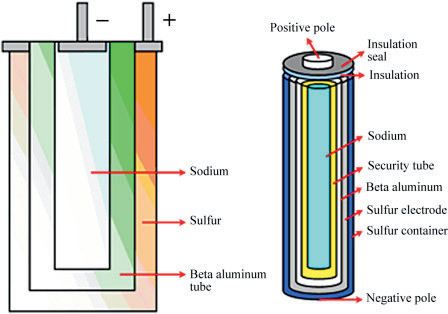
The battery uses sulfur as the positive electrode and sodium as the negative electrode, with a beta-alumina ceramic tube serving as the electrolyte. It operates at high temperatures (around 300 °C) and utilizes low-cost, widely available materials — sodium, sulfur, oxygen, steel, and silica. On charge, sodium at the anode releases electrons (oxidation) and sulfur at the cathode accepts electrons (reduction), forming sodium polysulfide (Na₂S₄); on discharge, sodium ions return to the anode while sulfur reforms at the cathode.
The NAS battery has undergone extensive safety testing — short-circuit, fire, and submersion — confirming its resilience without leakage or combustion. Batteries ship in 20-foot containers of six modules, each container providing 1.45 MWh of storage, and withstand heat, cold, and high-salinity environments.
Operating Characteristics
Economic Viability
Capital costs: around $300–$400 per kWh. LCOS: between $0.15 and $0.25 per kWh — competitive for grid-scale storage, renewable integration, and energy arbitrage where deep discharge cycles are frequent. Key markets: renewable energy balancing, load leveling and peak shaving for utilities, and remote or island communities needing reliable long-duration storage.
How the Technologies Compare
| Technology | Capital cost | Round-trip efficiency | Lifespan / cycles | LCOS | Best suited for |
|---|---|---|---|---|---|
| Vanadium Redox Flow | $400–600/kWh | 65–85% | 20+ years, near-unlimited cycles | $0.10–0.15/kWh | Long-duration utility storage |
| Zinc-Bromine Flow | $300–500/kWh | 60–75% | 2,000–5,000 cycles | $0.10–0.20/kWh | Deep-cycling microgrids & off-grid |
| Sodium Sulfur (NAS) | $300–400/kWh | 75–90% | 15 years, 4,500–5,000 cycles | $0.15–0.25/kWh | Load leveling & peak shaving |
| Lithium-ion (reference) | $200–400/kWh | 85–95% | Degradation-limited | $0.05–0.20/kWh | Short-duration, space-constrained |
Investing in these alternatives can create a more resilient and sustainable energy future — with each chemistry finding its niche where lithium-ion technology falls short.