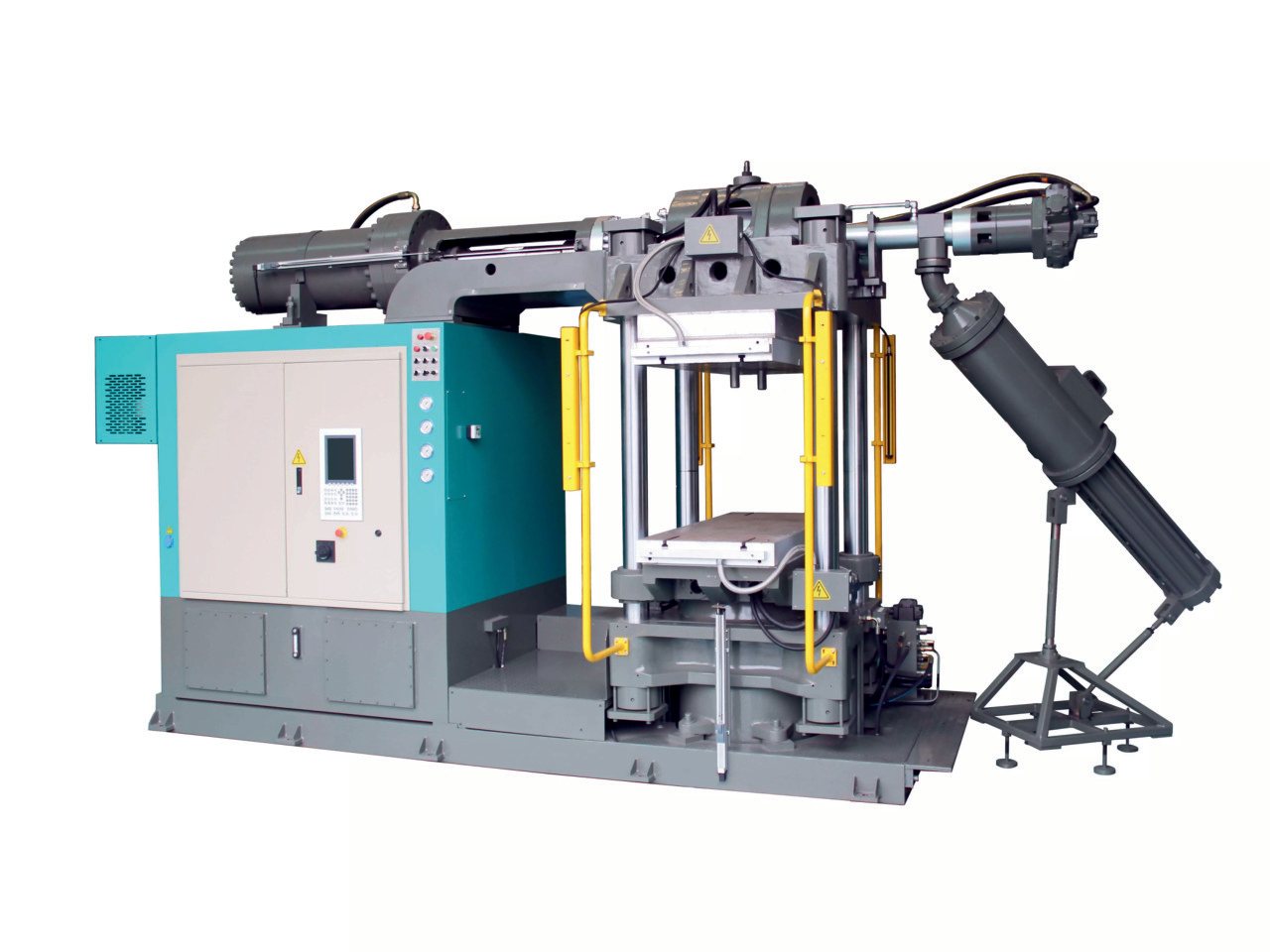
Market Dynamics & Manufacturing Approaches
The manufacturing of composite insulators for overhead line applications is largely a machine-driven process, with product quality heavily influenced by the calibre of equipment, precision-engineered moulds, and critical sub-components — the FRP core rod, polymeric housing material (high consistency rubber or liquid silicone rubber), and metal end fittings.
Unlike porcelain or glass insulators, composite insulators require far fewer intermediate processing steps and handling, and production typically operates at a smaller scale. These characteristics have lowered barriers to entry, contributing to a rapid proliferation of manufacturers globally.
Manufacturing Priorities in Injection Moulding
For manufacturers, the primary operational goals revolve around achieving a high conformity rate, minimal raw material wastage — particularly of costly silicone compounds — and reduced cycle time. These factors directly impact equipment efficiency, workforce productivity, product quality, and cost competitiveness.
Conformity rate serves as a key performance indicator of quality assurance across the production line. In injection moulding with high consistency rubber (HCR) silicone, one frequent challenge is the entrapment of air within the viscous material as it transitions from the stuffer and plasticizing unit into the mould cavity.
The plasticizing unit's role is critical: it conditions the HCR silicone for optimal flow, eliminates air bubbles, and preserves material integrity. The plasticized silicone is then delivered to a cold runner system, which maintains uniform injection pressure across all nozzles — enhancing injection consistency and maximizing material utilization for significantly lower waste.
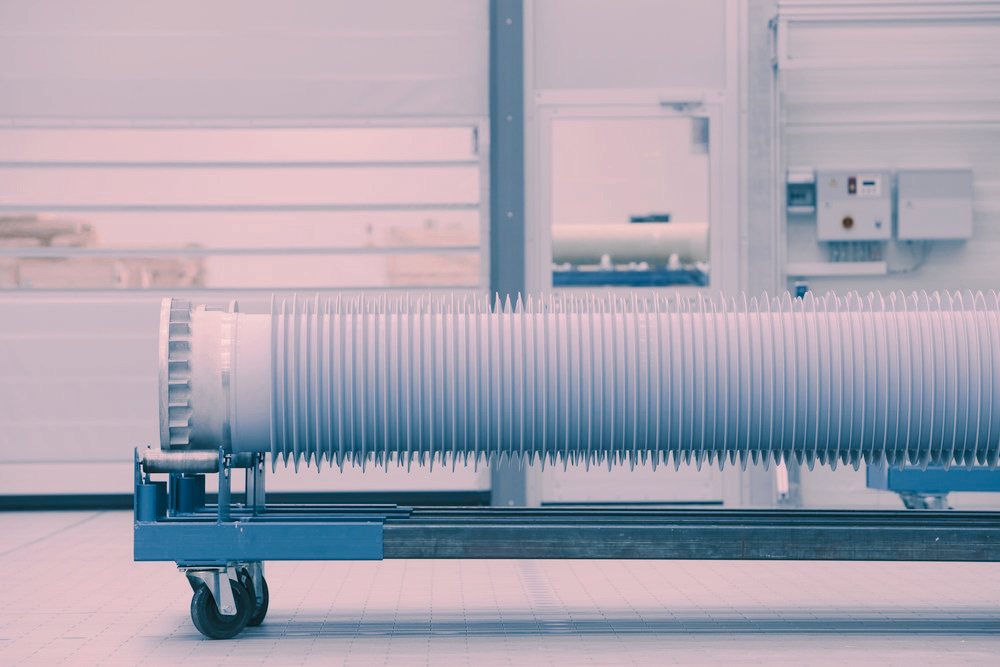
Another factor that can compromise conformity is displacement of the FRP rod within the mould cavity — especially if the rod shifts from centre due to machine vibrations, which is particularly relevant when end fittings are pre-crimped. A mould-closing mechanism where the top mould descends onto the bottom helps stabilize the rod prior to injection; precise control of injection speed, temperature, and pressure maintains dimensional accuracy and avoids internal defects.
Scaling Up: Modern Machines, Specialized Design
As production demands scale, manufacturers require moulding equipment capable of high-volume throughput with minimal downtime. Current-generation machines can handle large-format insulators — 220 kV units in a single shot, or even 500 kV insulators in a two-shot cycle — a major productivity leap from the 1990s, when equipment was often adapted from unrelated moulding applications.
Today's injection moulding technology is highly specialized for composite insulator production. While earlier strategies made a wide variety of insulator sizes on the same machine, modern manufacturers prefer dedicated systems tailored to their proprietary silicone formulations and product lines — optimizing plasticizing and injection systems for material hardness and design requirements, achieving higher productivity and superior consistency at scale.
Process Control and Defects
Optimizing the process requires meticulous control over injection pressure, speed, and volume. Some defects are readily visible — flash formation, trapped air, material shortage, surface blemishes, uneven colouration. Others are subtle: rod misalignment or damage, poor concentricity, uneven curing or scorching, and most critically, inadequate adhesion between the silicone housing and the FRP rod.
Poor bonding between the silicone housing and FRP rod has emerged as a leading root cause of insulator failure in recent field performance analyses.
Precision, Safety, and Future Trends
Ease of maintenance matters in equipment selection: machines that allow servicing at ground level — no elevated platforms or climbing — enhance operator safety and reduce ergonomic strain. Loading silicone into the stuffer, for instance, can be physically taxing and potentially hazardous if not ergonomically optimized.
Material type also shapes equipment requirements. Whether the housing is HCR or LSR, dosing units face significant demands — ensuring process stability under high pressure while allowing smooth changeovers between silicone barrels. Where multiple components must be mixed precisely, static mixers are used, sometimes two or three in tandem. Some manufacturers now adopt volumetric dosing systems with electronically controlled pump strokes — precise mixing that prevents one component running out before the other, avoiding partial or unusable batches of high-value silicone.
The mould itself plays a central role in quality and efficiency. Multi-cavity moulds allow simultaneous production of different components, reducing mould changes, cleaning, and reheating time. As most insulator manufacturers lack in-house mould servicing, tools are typically returned to the original supplier for periodic inspection, repair, or refurbishment.
Looking ahead, equipment suppliers are evolving toward a modular approach — standardizing core components while enabling flexible, customer-specific configurations. Innovations include sliding platforms for easier component insertion and demolding, and customized over-moulding solutions such as conductive parts for cable accessories.
The next phase of innovation is expected to focus on downstream automation. Since parts remain warm and vulnerable to deformation immediately after demolding, automating post-mould handling will be crucial to protecting product integrity and maximizing first-pass yield.