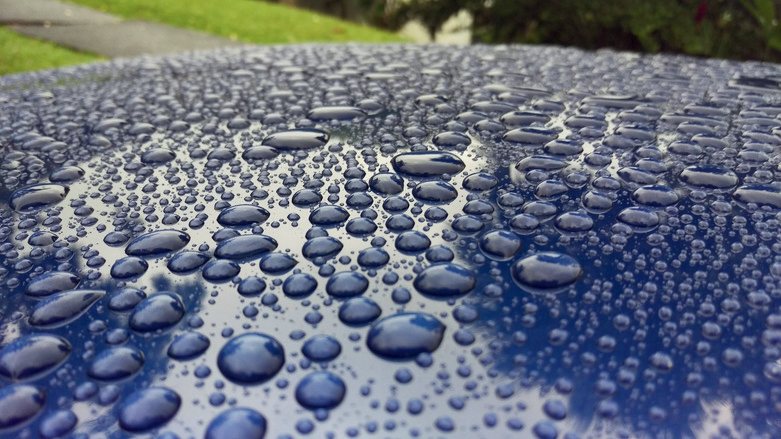
What Is Hydrophobicity?
Hydrophobicity refers to the ability of a material's surface to repel water. In composite insulators, which are typically made from silicone rubber, this property ensures that water forms discrete droplets rather than spreading into a continuous film on the surface.
Why It Matters in Composite Insulators
High-voltage transmission demands reliable insulation. Hydrophobic composite insulators offer superior performance under extreme weather, ensure reliability in high-contamination zones like coastal areas and industrial sites, and enhance efficiency by reducing energy losses from leakage currents and flashovers.
Major Mechanisms Behind Hydrophobicity Recovery
1. Diffusion of Low-Molecular-Weight (LMW) Siloxanes
In silicone rubber, a small fraction of oligomeric or low-molecular-weight chains — LMW siloxanes — is present in the bulk, with high mobility relative to the crosslinked network. When an insulator's surface is exposed to corona discharge, UV, or contamination, the topmost layer may become oxidized or partially eroded, increasing surface energy and making it less hydrophobic.
In response, LMW siloxanes migrate outward from the bulk, driven by thermodynamic and concentration gradients — the damaged layer has fewer of these nonpolar molecules, so LMW species move toward the interface to equalize concentrations.
Practical impact: over time, the outward migration of LMW siloxanes re-establishes a hydrophobic film on the surface — significantly reducing leakage currents in polluted environments and preventing flashovers.
2. Surface Energy Considerations
Surface energy governs a material's interaction with water. Silicone rubbers, with their abundance of nonpolar methyl groups, intrinsically exhibit low surface energy (≈20–24 mN/m), leading to high contact angles against water. If the surface is damaged — by microcracks or contamination — the contact angle typically decreases, becoming more hydrophilic. As LMW siloxanes or reoriented methyl groups rebuild a low-energy coating, the contact angle climbs back toward its original value.
3. Reorientation of Polymer Chains
Beyond LMW migration, the polymer matrix itself can undergo chain reorientation at the surface. When the outermost layers are perturbed — by corona discharge, UV radiation, or chemical contamination — longer polymer chains (the PDMS backbone) can rearrange so the lowest-surface-energy groups face outward. Reorientation is promoted by thermal activation (above the glass transition temperature, chains gain mobility), molecular architecture (crosslink density and chain flexibility), and surface oxidation (which can trigger scission and rearrangement).
The Hydrophobic Recovery Test
Key Methods to Test Hydrophobic Recovery
Factors Monitored During Testing
- Recovery time — duration required to regain the hydrophobic state.
- Recovery efficiency — degree to which hydrophobicity is restored versus the original state.
- Environmental conditions — recovery behaviour under different temperatures, humidity levels, and pollutant types.
Testing hydrophobic recovery provides critical insight into the durability and reliability of silicone rubber insulators — especially in polluted, high-stress environments.