Enabling South Asia's Energy Transformation
The transition to a sustainable energy future requires robust infrastructure for cross-border power exchange, allowing nations to share resources, balance demand, and leverage renewable energy generation. India, with its central position in South Asia, plays a pivotal role in fostering cross-border grid interconnections with neighbouring countries — enabling efficient utilization of surplus electricity, enhancing energy security, and supporting regional cooperation.
Why Cross-Border Grid Interconnections Matter
India's Central Role in Regional Power Integration
India's unique geographical location and established energy sector position it as a hub for cross-border grid interconnections in South Asia. Collaborations with SAARC and BIMSTEC countries, facilitated through bilateral agreements and MoUs, are creating a cohesive energy network across the region.
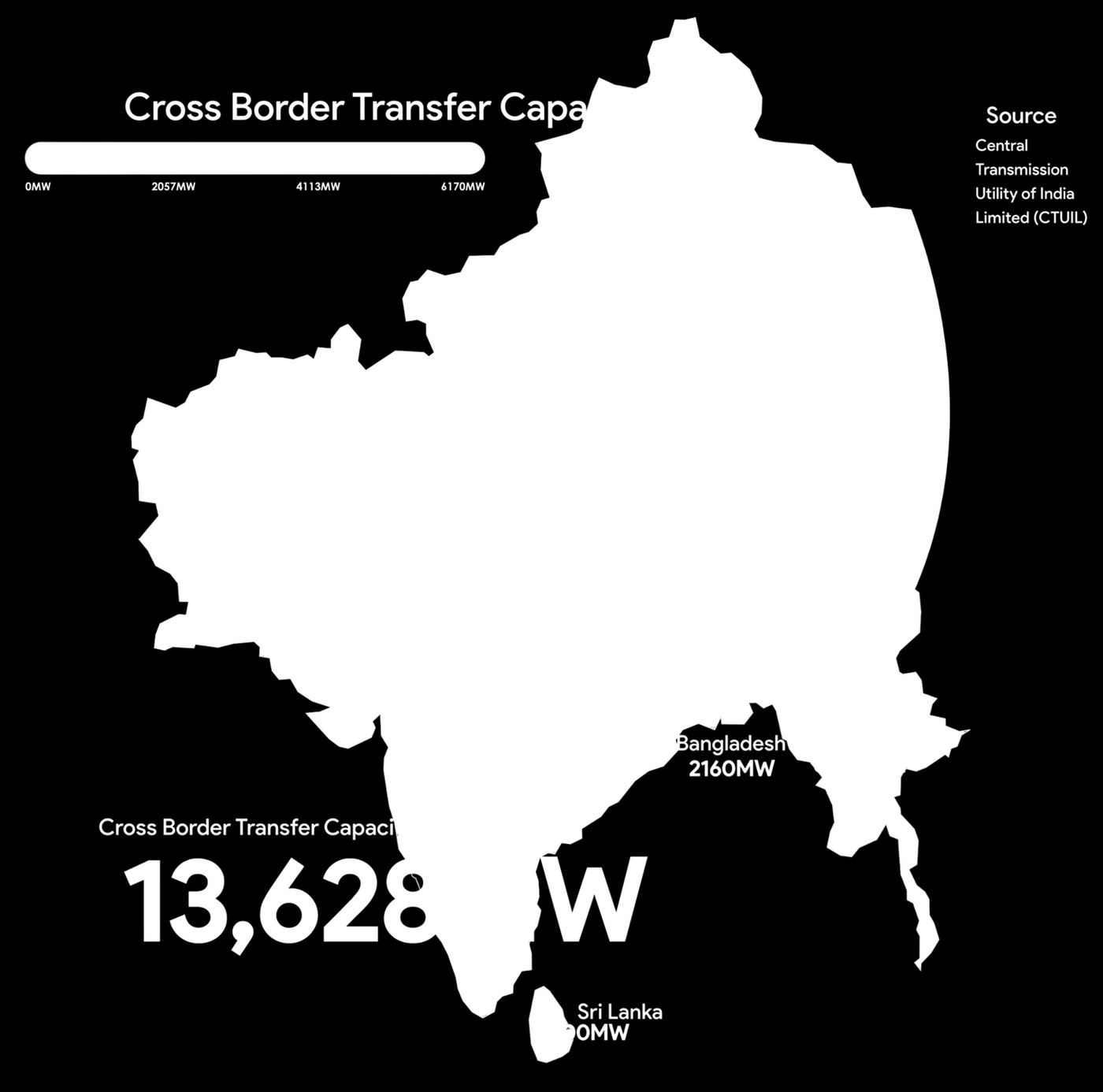
Transmission links connect border states like Bihar, Uttar Pradesh, Uttarakhand, West Bengal, Assam, and Tripura to neighbouring nations.
Spotlight on Major Cross-Border Partnerships
India–Sri Lanka HVDC Link
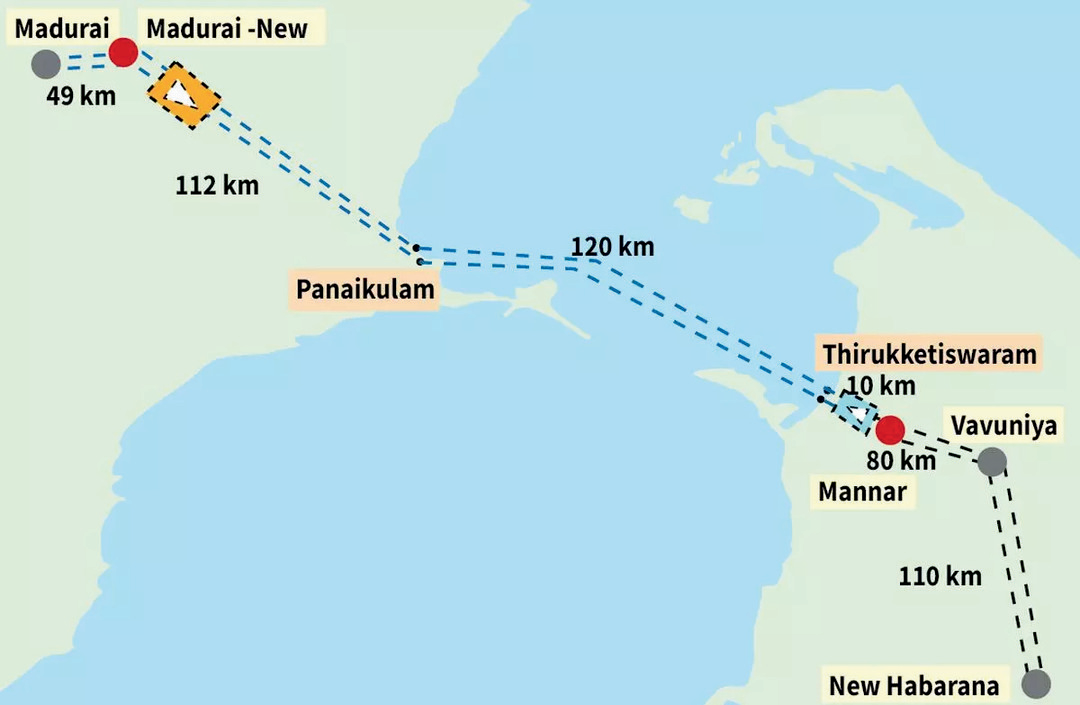
A 1,000 MW HVDC interconnection between Madurai (India) and Mannar (Sri Lanka) using voltage source converter technology is under finalization. The link will be 285 km long, with 50 km of submarine cables, built by Power Grid Corporation of India Limited and the Ceylon Electricity Board. Construction is expected to start in 2030 at a cost of $340–430 million — integrating Sri Lanka into the regional power network.
One Sun One World One Grid (OSOWOG): India is spearheading this initiative to connect its electricity grid with countries like the Maldives, Singapore, UAE, and Saudi Arabia — creating a global grid for renewable energy that promotes clean energy trade and integration.
India–Bhutan Cooperation
In 2006, India and Bhutan signed an agreement to collaborate on hydroelectric power development — project construction, transmission systems, and electricity trade with public and private sector participation. Currently, approximately 2,070 MW from Bhutan's operational hydroelectric projects is exported to India:
| Hydroelectric project | Capacity |
|---|---|
| Tala HEP | 1,020 MW |
| Mangdechu HEP | 720 MW |
| Chukha HEP | 336 MW |
| Dagachu HEP | 126 MW |
| Kurichu HEP | 60 MW |
The connecting transmission network includes the Chukha–Birpara 220 kV double-circuit and single-circuit lines, the Kurichu–Gelephu–Salakati 132 kV line, the Tala–Siliguri 400 kV 2×D/C line, and the Jigmeling–Alipurduar and Punatsangchu I & II–Alipurduar 400 kV quad lines. Power from these projects — along with hydroelectric output from Sikkim and India's northeast — is transmitted onward via the high-capacity Biswanath Chariali–Alipurduar–Agra ±800 kV, 6,000 MW HVDC bipole link.
India–Bangladesh Energy Trade
In January 2010, India and Bangladesh signed an MoU covering power generation, transmission, energy efficiency, renewable development, and grid connectivity. India currently supplies 1,160 MW of electricity to Bangladesh through two key corridors:
- The Baharampur (India)–Bheramara (Bangladesh) 2×400 kV double-circuit line, supported by a 2×500 MW HVDC back-to-back station at Bheramara.
- The Surajmaninagar (Tripura)–Comilla (Bangladesh) 400 kV D/C line, currently operating at 132 kV.
Plans are underway for the Katihar (India)–Parbotipur (Bangladesh)–Bornagar (India) 765 kV D/C line to further enhance connectivity.
India–Nepal Interconnections
In October 2014, India and Nepal signed an agreement on electric power trade, cross-border transmission interconnection, and grid connectivity — covering cooperation through government, public, and private enterprises on mutually agreed terms.
- Existing links: the Muzaffarpur (India)–Dhalkebar (Nepal) 400 kV double-circuit twin line, and the Tanakpur HEP–Mahendra Nagar 132 kV single-circuit line.
- Planned: the Gorakhpur (India)–New Butwal (Nepal) 400 kV D/C quad line and the Arun-3 HEP–Dhalkebar–Sitamarhi (India) 400 kV D/C quad line, to evacuate power from the 900 MW Arun-3 project and other hydropower developments.
- Upgrades: second circuits for the Kataiya–Kushaha and Raxaul–Parwanipur 132 kV lines in Bihar, plus the Nanpara–Kohalpur and Nautanwa–Mainhiya 132 kV D/C lines under UPPTCL–Nepal grid connectivity initiatives.
India–Myanmar Grid Expansion
In October 2016, India and Myanmar signed an MoU covering power sector investments, generation, transmission, energy efficiency, renewable development, power trading, consultancy, and human resource development. Since April 2016, India has supplied around 2–3 MW of electricity to Myanmar through an 11 kV line connecting Moreh in Manipur to Tamu Town.
The two countries have agreed to establish a 500 MW HVDC interconnection between Imphal (India) and Tamu (Myanmar), with discussions ongoing for low-voltage radial interconnections between Myanmar and Arunachal Pradesh, Manipur, Mizoram, and Nagaland.